




Badger Sore Muscle Rub Balm is Gluten Free
People with coeliac disease must strictly avoid gluten in their diet — but what about skin care? Do coeliacs need gluten free shampoo? Is gluten in moisturiser dangerous? Can gluten be absorbed through the skin?
In this blog post, we answer some of the most common questions about gluten and skin care for people with coeliac disease.
What is coeliac disease, and how is it different from gluten intolerance?
Gluten is a protein found in wheat, barley, rye and some other grains.
Some people avoid gluten by choice- for personal or health reasons such as weight loss, allergies or inflammation. This is called being gluten free or following a gluten-free diet.
Others experience non-coeliac gluten sensitivity (NCGS), where gluten may cause symptoms such as bloating, gas, diarrhoea, headache or fatigue after eating gluten, but does not damage the intestine. This is commonly referred to as gluten intolerance.
Coeliac disease is an autoimmune condition. When someone with coeliac disease eats gluten, their immune system attacks the lining of the small intestine, causing inflammation and long-term damage. This affects nutrient absorption and can lead to various health problems.
For people with coeliac disease, strict lifelong avoidance of gluten is medically necessary. People with NCGS may benefit from a gluten-free diet, but it is not medically required. People who are gluten free by choice can decide how strict they wish to be.
Can coeliacs absorb gluten through their skin?
This is one of the most common misconceptions about gluten and personal care products. According to Coeliac Australia, gluten cannot be absorbed through intact skin and does not cause intestinal damage through contact alone. Personal care products only pose a risk if gluten is accidentally ingested- for example, through lip products or toothpaste.
However, there are some situations where gluten in skin care products can pose a risk These situations are specific and manageable once understood.
When does gluten in skin care actually matter?
1. Products That May Be Swallowed
If the product comes in contact with the mouth or eyes, such as lipstick, lip balm, toothpaste or mouthwash, even applying face moisturiser too close to your eyes and lips can be an issue. If these products contain gluten, they can be ingested and trigger an immune response in the gut. You also need to wash your hands after applying body lotion and avoid putting fingers into your mouth.
2. Dermatitis Herpetiformis (DH)
If the product appears to trigger a skin reaction - such as itching, rash or blisters- this may relate to dermatitis herpetiformis (DH). DH is a skin manifestation of coeliac disease that causes an intensely itchy, blistering rash and affects around 10% of people with coeliac disease. Importantly, DH is triggered by gluten ingestion, not skin contact. It can occur even in those following a strict gluten-free diet and is typically managed with medication alongside ongoing dietary gluten avoidance.
What skin care ingredients are not gluten free?
Gluten-derived ingredients can appear in a range of personal care products- including moisturisers, shampoos, lotions, creams, serums, masks, scrubs, cleansers, toners, makeup removers, sunscreens and cosmetics.
Ingredients that may indicate the presence of gluten include:
- Triticum vulgare (wheat)
- Hordeum vulgare (barley)
- Secale cereale (rye)
- Avena sativa (oat)
- Wheat germ oil
- Hydrolyzed wheat protein
- Hydrolyzed vegetable protein
- Malt extract
- Maltodextrin
- Dextrin
- Cyclodextrin
- Modified food starch
- Brewer's yeast
These ingredients are not always clearly labelled. If you are unsure whether a product contains gluten, contact the manufacturer or check trusted ingredient databases.
Can coeliacs use normal shampoo?
Yes, in most cases. Shampoo is safe for people with coeliac disease because gluten cannot be absorbed through the scalp. Shampoo does not cause problems unless someone accidentally swallows it or it gets into their eyes or mouth, which can easily happen if it runs down the face in the shower. Some people prefer gluten-free shampoo for peace of mind.
Is gluten in moisturiser or sunscreen dangerous for coeliacs?
Generally, no. Gluten in moisturisers, serums, sunscreens and body lotions does not pose a medical risk unless the product is likely to enter the mouth. For peace of mind, browse our collection of gluten free skin care products.
Can coeliacs wear makeup that contains gluten?
Makeup applied near the mouth or eyes may be accidentally ingested. This is especially relevant for products applied near the mouth or eyes, such as lipstick, lip gloss, lip liner, eye shadow, eyeliner, mascara and foundation.
As with skin care products, ingredients are not always clearly labelled. If unsure, contact the manufacturer directly.
Does toothpaste need to be gluten free?
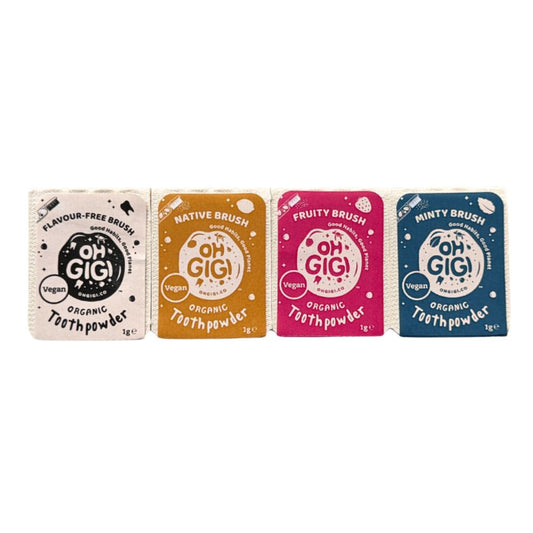
Yes. Because toothpaste is used in the mouth, coeliacs must use gluten free toothpaste. Small amounts may be swallowed during brushing.
Do you need gluten free toothpaste? You can explore our range of gluten free toothpaste here.
Can you kiss someone who has eaten gluten?
Kissing someone who has eaten gluten can be risky for people with coeliac disease. Even a small amount of gluten transferred through saliva may trigger an immune reaction and cause intestinal damage. Gluten can remain in saliva for several hours, so trace exposure may be enough to cause symptoms in sensitive individuals.
To reduce risk, the person who ate gluten should brush their teeth, rinse their mouth thoroughly and wash their face before kissing. Alternatively, avoiding gluten for several hours beforehand can help lower the chance of gluten transfer.
Gluten and skin care: common myths
Myth: Gluten can soak through your skin and damage your gut.
Fact: Gluten molecules are too large to pass through intact skin.
Myth: All skin care must be gluten free for coeliacs.
Fact: Only products that may be swallowed pose a meaningful risk.
Myth: If you touch gluten, you’ll trigger a reaction.
Fact: Reactions occur when gluten is ingested, not touched.
Gluten free skincare choices at Biome
We stock a thoughtful range of gluten free skin care.
The brands below state on their packaging or website that their products are gluten free. There may also be other individual products at Biome that do not contain gluten but are not formally labelled as gluten free.


Please note: We identify products as gluten free when this is stated on the packaging or the brand’s official website. Formulations can change and errors can occur. Please always check ingredients yourself before use.
The best way to avoid gluten is to read the labels carefully, contact the manufacturers or check online databases for gluten-free products.
If you have specific concerns about gluten and your health, consult your doctor or a registered dietitian.
Explore our collections:
Gluten Free Chocolate
Gluten Free Food
Gluten Free Toothpaste
Related Reads
Our Favourite Gluten Free and Dairy Free Chocolates
Do Coelics need gluten free skincare?
Is gluten free chocolate healthier?
A complete list of the many wholefoods you can enjoy on a gluten free diet
How To Build A Gluten Free Pantry
Do you need gluten free toothpaste?