




Updated in July 2026. First published September 2022.
If your usual moisturiser has stopped keeping up—hands that feel tight within an hour of washing, patches that flake no matter how much lotion you use, or skin that seems to need “something more” the moment the weather turns—shea butter is often the ingredient people land on next. It’s one of the few skincare staples where the reputation and the science actually line up.
Here's what shea butter is, why it works differently to a standard lotion, and how to get the most from it.
Quick answer: Shea butter is a rich natural moisturiser containing fatty acids that help reinforce the skin barrier and lock in moisture. It is particularly well suited to dry, flaky or sensitive skin. Biome offers both pure certified organic shea butter and a softer everyday blend enriched with jojoba oil and vitamin E.
What is shea butter?
Shea butter is a fat extracted from the nut of the shea tree, native to West and East Africa. The nut is ground and boiled, then the fat rises to the top and sets into the thick, ivory-to-cream-coloured butter most people recognise.
Unlike a water-based lotion, shea butter is almost entirely fat—rich in fatty acids including oleic, stearic and linoleic acid, along with vitamins A and E.
That composition is what makes it behave more like a barrier balm than a cream. Rather than absorbing and evaporating quickly, it sits on the skin’s surface and helps hold moisture in.
Why is shea butter good for dry skin?
The short answer is that it reinforces your skin’s own barrier rather than simply adding surface moisture that disappears within a few hours.
Dry, tight or flaky skin is usually a sign that your skin’s barrier is losing water faster than it can replace it—what is known as transepidermal water loss. Shea butter’s fatty acid profile helps slow that process by forming an occlusive layer that keeps existing moisture locked in, while its vitamin A and E content supports the skin’s natural repair processes.
Its plant compounds may also have a calming effect, which is part of why it is often reached for when skin feels dry and irritated, rather than simply dry.
This is also why a rich butter may succeed where a standard lotion has stalled. A lotion is designed to absorb quickly and feel light, which is ideal for normal skin day to day, but it may not provide enough lasting protection for dryness caused by cold weather, frequent hand-washing or a weakened skin barrier. Read on for signs your skin barrier needs something richer.
Signs your skin needs a richer moisturiser
A standard moisturiser is usually enough for day-to-day maintenance, but it may be worth reaching for something richer when:
- Your hands feel tight or start flaking again within an hour of moisturising.
- Dry patches keep returning in the same places, particularly on your elbows, knees or heels.
- A change of season, especially the transition into winter, leaves your skin noticeably drier than usual.
- Your skin feels itchy or uncomfortable rather than simply looking dry.
- You have mature or sensitive skin that reacts to lighter or fragranced lotions.
How to use shea butter on your face and body
- Hands: Work a small amount into your hands after washing, particularly before bed, to help counter the drying effects of frequent handwashing or sanitiser.
- Face: Use sparingly—a pea-sized amount is generally plenty. Warm it between your fingertips so it spreads thinly rather than sitting as a heavy layer.
- Body: Apply to slightly damp skin after a shower to help it spread more easily and hold in the water already on your skin.
- Dry patches: Elbows, knees and heels can usually take a thicker layer than your face or hands because the skin is less prone to congestion.
- Layering: If your skin is very dry, apply a lighter serum or hydrating product first, then use shea butter over the top to seal it in.
- Using pure shea butter: Scoop out a small amount and rub it between your palms for a few seconds. The warmth from your hands will soften it enough to spread without needing to melt it.
- Nails and cuticles: Massage a small amount into the nails and surrounding skin to soften dry cuticles and moisturise hardworking hands.
Our favourite shea butter moisturisers
Biome offers two certified organic shea butter moisturisers, each suited to different skin types and routines.

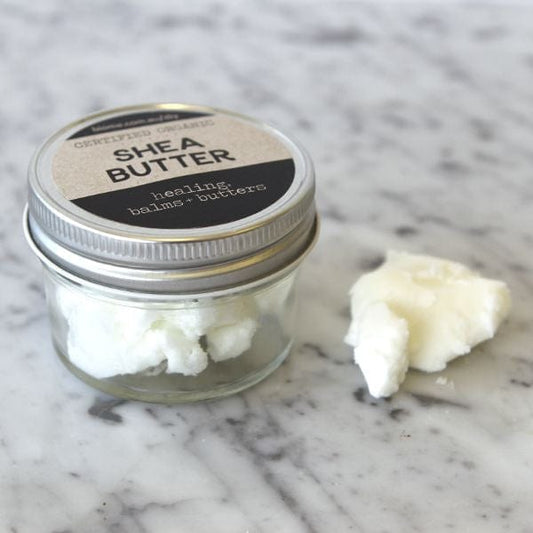
Biome 100% Pure Shea Butter
Best for: DIY skincare, very dry patches and anyone wanting a simple single-ingredient moisturiser.
✔ 100% certified organic shea butter
✔ Nothing added
✔ Packaged in a reusable glass jar
✔ Ideal for homemade balms and body butters
✔ Can be used on the face, hands and body
Why it stands out
This is shea butter in its simplest form. Its firm texture needs to be warmed between your fingers before application, but that also makes it the more versatile choice.
Use it directly on dry skin or melt it into homemade lip balms, creams, body butters and other DIY skincare recipes.
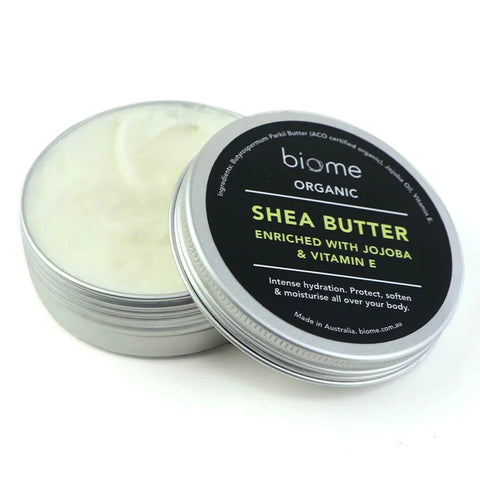
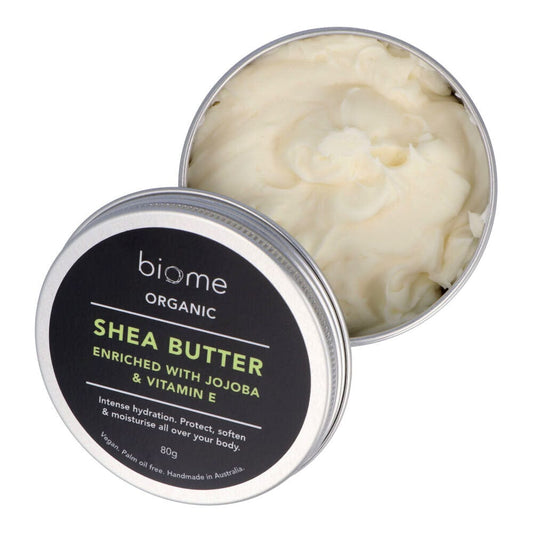
Biome Organic Shea Butter with Jojoba & Vitamin E
Best for: Easy everyday moisturising for your face, hands and body.
✔ Softer texture that spreads easily
✔ Enriched with organic jojoba oil
✔ Added vitamin E
✔ Ready to use straight from the tin
✔ Suitable for dry and sensitive skin
Why it stands out
This version blends organic shea butter with jojoba oil and vitamin E. Jojoba oil is structurally similar to the skin’s natural sebum, helping soften the shea and allowing it to glide onto the skin without needing to be warmed first.
It is a convenient choice for everyday use on the face, hands and body, particularly when you want the richness of shea butter in a softer, easier-to-apply texture.
Which one should you choose? Choose the jojoba and vitamin E blend if you want a softer, ready-to-use daily moisturiser. Choose the 100% pure shea butter if you prefer a single-ingredient product, need something for very dry patches or want a base for homemade skincare.
Quick tip: Apply shea butter to slightly damp skin after showering or washing your hands. This helps seal in the water already on your skin for longer-lasting moisturisation.
What customers say about Biome shea butter
Biome customers use our organic shea butter for everything from deeply moisturising dry hands and nourishing their face to soothing dry, sensitive and eczema-prone skin. Here are a few favourite reviews from verified customers.
“I use this as a nighttime face moisturiser and it is perfect for me! Despite the thickness it doesn't feel heavy on my face, and is great for calming my dermatitis and redness.”
★★★★★ Joanna
“I sometimes get rosacea and psoriasis on my face, particularly when the seasons change, and needed something more moisturising than my usual cream. This was amazing! No issues with breakouts either.”
★★★★★ Cass B.
“Love the feel of it on my skin. It is so rich, my skin just soaks it up. The texture is great. Very happy.”
★★★★★ Mary D.
“Shea butter is so nice to use on my nails and hands. It goes on really easily and isn't greasy.”
★★★★★ Sandra D.
“Brilliant quality. A little goes a long way.”
★★★★★ Katherine
“I have been using this product for several months. I use it on my face and body. It feels so hydrating and calms my skin when it is feeling itchy. I also believe that since I have been using it my wrinkles are less obvious.”
★★★★★ Debra
“It's one of the only moisturisers my son will let me use from head to toe, and it actually helps hydrate his skin and relieve his eczema. We use it every day, and I love how hydrated my own hands feel after applying it.”
★★★★★ Karen L.
Customer experiences are personal and results can vary. Shea butter is a moisturiser and does not replace medical treatment for eczema, psoriasis, rosacea or other diagnosed skin conditions.
Will shea butter clog my pores or cause breakouts?
This is the question that stops a lot of people from trying it on their face, so it is worth answering directly: for most people, shea butter is generally considered unlikely to clog pores or trigger breakouts.
Where people may run into trouble is using too much. A thick layer left sitting on the skin can feel congested regardless of the ingredient. The simple fix is to use a smaller amount than you think you need, particularly on the face, and allow it to absorb rather than piling it on.
It is also worth remembering that shea butter is a moisturiser, not an acne treatment. It will not clear breakouts, but it is not necessarily the cause of them either.
If you're wondering how natural oils and butters affect acne-prone skin, read our guide to whether jojoba oil clogs pores or causes breakouts, which explains what comedogenic ratings really mean and how to choose moisturisers for blemish-prone skin.
DIY recipes with shea butter
Shea butter isn't just a wonderful moisturiser—it's also one of the most versatile ingredients for homemade skincare. Biome's 100% Pure Certified Organic Shea Butter is ideal for DIY recipes because it contains no added ingredients and melts beautifully with oils and beeswax.
DIY Lavender & Peppermint Lip Balm
Perfect for: Softening dry, chapped lips naturally.
Simply melt together:
- 2 tbsp shea butter
- 2 tbsp beeswax
- 2 tbsp coconut oil
Pour into small lip balm jars and allow to set.
DIY Coconut & Shea Body Whip
Perfect for: Deeply nourishing dry skin after showering.
Simply melt together:
- ¼ cup coconut oil
- ¼ cup shea butter
Allow the mixture to cool slightly before whipping with electric beaters until light and fluffy.
DIY Natural Vapour Rub
Perfect for: A comforting chest balm made with essential oils.
Combine:
- ¼ cup shea butter
- ½ cup coconut oil
- 2 tbsp beeswax
- Eucalyptus, peppermint, rosemary & clove essential oils
Melt the base ingredients together, stir through the essential oils and pour into a glass jar to set.
Looking for a deeply nourishing moisturiser?
Whether you are dealing with dry winter skin, rough hands, flaky patches or simply want a richer everyday moisturiser, shea butter offers a simple way to support your skin barrier and keep moisture where it is needed.
Choose Biome’s pure certified organic shea butter for DIY skincare and intensive dry patches, or the jojoba and vitamin E blend for easy everyday use on your face, hands and body.
Frequently asked questions
What’s the difference between raw and refined shea butter?
Raw or unrefined shea butter is minimally processed, retaining its natural colour, nutty scent and vitamin content. Refined shea butter is heat-treated to remove much of the scent and colour, giving it a lighter and more neutral feel but reducing some of its naturally occurring compounds.
Biome’s shea butter is organic and unrefined. It therefore retains its natural characteristics, including a mild scent that some people may notice when they first use it.
Is shea butter better than coconut oil for dry skin?
They work differently rather than one being strictly better. Coconut oil is generally lighter and may absorb more quickly, while shea butter is thicker and provides a more substantial occlusive layer.
Shea butter is often the better fit for persistently dry, tight or flaky skin, while coconut oil may suit people looking for lighter everyday moisturisation.
Can shea butter help eczema-prone skin?
Some people with mild eczema-prone skin find shea butter helpful as part of their moisturising routine because its fatty acids can support the skin barrier and help reduce moisture loss.
Shea butter is not a treatment for eczema. If you or your child has eczema or another diagnosed skin condition, speak with your doctor or dermatologist about the products that are appropriate for your individual care plan.
Is shea butter safe to use every day?
For most people, shea butter is suitable for daily use. It can be reapplied to the hands and body when needed. On the face, a small daily amount is generally better tolerated than an occasional thick layer.
Can you use shea butter on your face?
Yes. Shea butter can be used on the face, particularly when the skin is dry or feels tight. Start with a very small amount, warm it between your fingers and press it gently into the skin.
Patch test first if your skin is sensitive or prone to reacting to new products.
Should shea butter be applied before or after moisturiser?
Shea butter is best used as the final step in a skincare routine. Apply water-based serums, lotions or lighter moisturisers first, then use a small amount of shea butter over the top to help seal in moisture.
Why does pure shea butter feel firm?
Pure shea butter is naturally solid at room temperature because it has not been softened with water or additional oils. Warm a small amount between your fingers or palms for a few seconds and it will soften enough to spread over the skin.
Related reads
Shea Butter vs Cocoa Butter vs Mango Butter: What's the Difference?
How to make a DIY coconut and shea body whip
DIY lavender and peppermint lip balm recipe
How to make a natural DIY vapour rub
This article is general information and doesn't replace advice from a dermatologist or doctor, particularly if you have a diagnosed skin condition.