



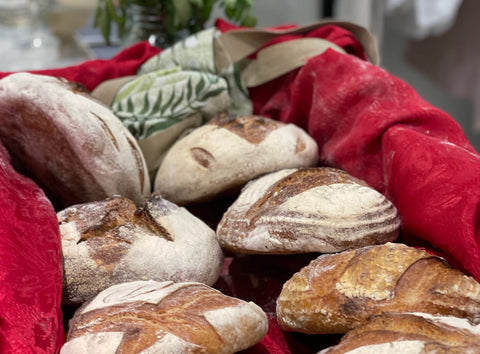
The most sustainable bread is usually bread made with organic, local or whole grain flour, naturally leavened where possible, bought unpackaged or baked at home, stored well, and eaten fully to avoid food waste.
Bread is one of the most popular and ancient foods in the world, but it can also have a significant environmental impact. From the cultivation of the grains to the processing of the flour to the baking of the loaves, bread production consumes a lot of water, energy, and land resources, and generates greenhouse gas emissions, waste, and pollution.
At Biome, we aim to help you make more sustainable choices starting simply with understanding how products are made and what from. By consciously thinking about what goes into a product, it helps to highlight the areas where you can make little steps to reduce impact.
First published in September 2023. Updated in May 2026 with current information.
So how can we make our bread more sustainable and reduce its ecological footprint?
1. Choose sustainable flour

A more sustainable bread flour is usually organic, locally milled, whole grain and made from diverse grains that support healthier soils and farming systems.
Organic flour:
Grown without synthetic pesticides or fertilisers that can harm the environment and human health.
Local flour:
Produced near where you live and reduces the carbon footprint of transportation.
Whole grain flour:
Retains the bran and germ of the grain and provides more fiber, vitamins, minerals, antioxidants, and phytochemicals than refined flour.
Diverse flour:
Made from different grains and supports biodiversity and crop rotation.
For Australian home bakers, choosing local stoneground flour can also support smaller mills, reduce food miles and bring more flavour and nutrition back into everyday bread.
Find here a list we have gathered of local and stone ground bread flour millers in Australia.
2. Use natural leavening agents

Use natural leavening agents, such as sourdough starter or yeast water, instead of commercial yeast. Natural leavening agents are made from fermented flour and water and contain beneficial bacteria and yeast that give bread a complex flavour and texture. They also help break down gluten and phytic acid in the flour, making bread easier to digest and potentially more nutritious. Commercial yeast, by comparison, is a single strain of yeast that is mass-produced and often contains additives and preservatives.
Natural leavening agents have a long history in bread making. Sourdough starter is one of the oldest forms, dating back to ancient Egypt. It is a mixture of flour and water left to ferment at room temperature for several days or weeks, creating the sour flavour characteristic of sourdough bread. A starter can be maintained indefinitely by regularly feeding it with fresh flour and water.
Yeast water is another natural leavening agent gaining popularity among home bakers. It is made by fermenting fruits, vegetables, herbs or grains with water and sugar, producing natural yeast and carbon dioxide that can be used to leaven bread dough. Depending on the ingredients used, yeast water can create a sweeter, fruitier flavour.
To bake with natural leavening agents, you prepare a preferment or levain: a portion of dough mixed with the starter and left to rise for several hours or overnight. This helps develop the flavour, texture and structure of the final loaf. Other ingredients such as salt, oil, honey, seeds, nuts, dried fruits, herbs or spices can also be added to the preferment or levain.
3. Bake bread at home or buy local
Baking your bread at home gives you more control over the ingredients, the process, and the quality of your bread. You can also save money, reduce packaging waste, and enjoy the satisfaction of making your own food. We have some great bread making tools and books to inspire you.
Buying your bread from a local bakery supports small businesses, artisans, and communities. You can also get fresh, handmade bread that uses local ingredients and traditional methods. You may even be lucky enough to find in your area a bakery that uses traditional sourdough methods, local flours, and does not use synthetic preservatives.
4. Take a reusable bread bag

A reusable fabric bread bag helps you avoid single-use plastic or paper bags at the bakery. Cotton bread bags, lined bread bags and beeswax bread wraps are useful for carrying fresh loaves home and storing them without creating unnecessary packaging waste.
Explore reusable bread bags for bakery loaves, homemade bread and freezer storage.
5. Store bread properly to avoid waste

Bread can go stale or mouldy quickly if not stored correctly. To keep your bread fresh longer, wrap in a cloth, bread bag, or store it in an airtight container or a bread box.
You can also freeze your bread in slices or chunks and thaw it when needed.
Learn more
Guide to how to store bread without plastic and
How beeswax bread bags keep bread fresh
Waste less
What to do with stale bread
If your bread does go stale or dry, it is still far too useful to throw away. Turn it into croutons, breadcrumbs, French toast, bread pudding, or use one of these simple tricks to bring it back to life.
- Refresh the crust: Sprinkle the bread with water and bake in a preheated oven for 5–10 minutes until crisp.
- Soften quickly: Wrap the bread in a damp paper towel and microwave for 10–15 seconds.
- Make croutons: Cut into cubes, then toss with oil, herbs, salt and pepper before baking until crunchy.
- Make breadcrumbs: Grate stale bread or pulse it in a food processor for fresh breadcrumbs to use for coating or binding.
By following these tips, you can make your bread more sustainable. Bread is not only a delicious food but also a symbol of culture, history, and community. Let's make it a part of our sustainable future!
FAQs
Why does sourdough last longer than commercial white bread?
Sourdough bread is amazing! It lasts longer than commercial white bread because it has natural preservatives. The sourdough starter contains friendly bacteria that produce lactic acid, which lowers the pH of the dough and prevents mould growth. Sourdough also has a thicker crust that protects the bread from drying out. Sourdough bread can stay fresh for up to a week or even longer if you store it in a cool and dry place.
Is homemade bread more sustainable?
Homemade bread can be more sustainable because you control the ingredients, avoid packaging and reduce waste, especially when you bake with local or organic flour.
How do you store bread without plastic?
Store bread in a reusable bread bag, beeswax bread wrap, cloth bag or bread box in a cool, dry place. Freeze sliced bread if you need it to last longer.