



Quick answer: What are mothballs made from, and are they toxic?
Traditional mothballs are solid pesticide blocks usually made from naphthalene or paradichlorobenzene. They slowly turn from solid to gas, releasing the fumes that repel or kill moths. Naphthalene can damage red blood cells, with babies, young children and people with G6PD deficiency particularly vulnerable. Natural deterrents such as red cedar and Huon Pine can help protect clothes without relying on naphthalene mothballs.
Originally published July 2025. Updated September 2026.
You’d be forgiven for thinking a product must be safe if it’s for sale in your country. In fact, people often say to me—"The chemicals wouldn't be allowed if they're not safe for people." And yet, here in Australia, there are many chemicals that brands are permitted to use for consumer products that have already been banned in other countries.
Moth repellents made from naphthalene are one example. Naphthalene is banned in Europe, New Zealand and China due to serious health risks. But in Australia, as long as they are housed in a child-safe plastic container they can be sold. There must be millions hanging in cupboards all over Australia slowly releasing poisonous vapour into the air around you!
If you've ever used moth balls you'll know they get smaller and smaller, eventually disappearing. Some of us are old enough to remember tossing them individually into our storage boxes and clothes, and having to replace them next season. Not to mention having to air out our clothes for days in the sun to get rid of the moth ball smell.
What are mothballs made from?
Traditional mothballs aren’t balls of herbs or essential oils. They’re solid pesticide blocks, usually made from naphthalene or paradichlorobenzene. They slowly turn directly from solid to gas, releasing fumes into your home, your wardrobe, your clothes.
Naphthalene in particular is a strong-smelling chemical made from coal tar or crude oil. It’s flammable, it’s toxic, and it’s not something you want in the air you breathe.
What’s really happening when mothballs “disappear”?
Ever noticed that mothballs shrink over time until they’re gone?
They don’t dissolve. They don’t get eaten. They evaporate—turning directly from solid to gas (a process called sublimation), right into the air you’re breathing.
Mothballs made with naphthalene work by slowly evaporating into a toxic gas. That vapour is the active ingredient—it spreads through the air and does one of two things to insects like moths:
- Repels adult moths: The strong smell of naphthalene confuses or overwhelms the moth’s sense of smell, discouraging them from laying eggs in the area.
- Kills larvae and eggs: In higher concentrations, the vapour can be lethal to moth eggs and larvae by disrupting their nervous systems and cellular functions.
But, those same vapours are also toxic to humans and pets, especially in closed spaces like wardrobes, drawers, and storage tubs.
It’s a scattergun approach: fill the air with poison and hope it gets the pest before it harms your clothes—while ignoring what it might be doing to your lungs.
Over time, this kind of exposure has been linked to headaches, nausea, dizziness—and more seriously, damage to your red blood cells and even increased cancer risk. Small kids, babies, pregnant people, and anyone with respiratory issues are particularly vulnerable.
And there’s another layer to it.
Because Australian regulations require mothballs to be sold in child-resistant containers, when the mothballs evaporate they leave behind an empty plastic container. That’s more single-use plastic adding to the plastics problem.
So not only are we polluting our air—we’re creating unnecessary plastic waste at the same time.
Why are they banned in other countries?
Health concerns. Naphthalene has been linked to:
- Cancer
- Respiratory issues
- Headaches, dizziness
- Haemolytic anaemia (especially in babies or anyone with G6PD deficiency)
This Wikipedia article has links to numerous reports regarding the health concerns around naphthalene.
It’s also been involved in child poisoning cases. The problem isn’t just touching or swallowing—just breathing it in, day after day, is enough to cause harm.
Because of those real-world consequences, the EU banned mothballs with naphthalene in 2008, and New Zealand followed in 2014. While in China the use of naphthalene for moth balls has been forbidden since way back in 1993—although it continues to manufacture them for export to naive countries like Australia!
So, why are they still being sold in Australia?
Technically, naphthalene mothballs are regulated here. They must be in child-resistant packaging with proper labels. But that regulation doesn’t cover what you buy online.
But, I was astounded to find that you could order loose naphthalene moth balls from Amazon, eBay, Temu, and even a store claiming to be organic, and have them shipped to Australia. No health warnings. No clue you’re handling a poisonous substance.

Over my 20 year journey with Biome, I've seen a lot that shocks me, but this one below from Ceylon Organic astounded me: On the front it says “100% organic protection” and natural ingredients. On the back "Free from artificial additives, preservatives and chemicals. Ingredients: Naphthalene 99.5%, Camphor 0.55%
That’s not just misleading—it’s dangerous. And it’s legal, because the laws haven’t caught up to the reality of online retail.

What are safer alternatives to naphthalene mothballs?
You can protect your clothes from moths and silverfish without bringing toxins into your home.
At Biome, we only stock natural, safe clothes moth repellents.
Red cedar blocks and oil
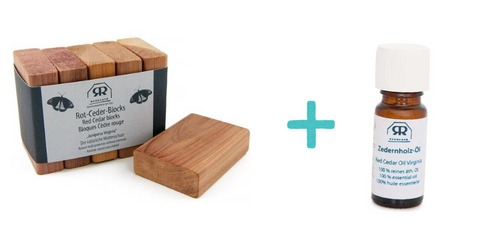
Best for: Wardrobes, drawers and stored clothes.
Red Cedar Oil – A classic moth deterrent. Used to refresh cedarwood blocks or wood balls. Moths and silverfish hate the smell, but humans love it.
Shop red cedarBug Off Moths essential oil blend

Best for: Refreshing wardrobe scent pods and natural moth deterrents.
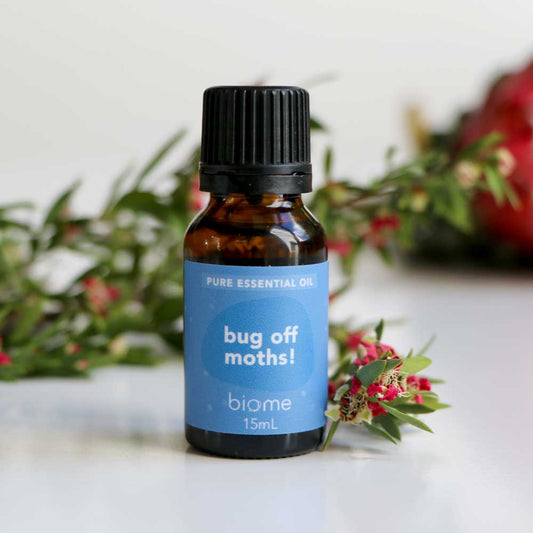
Bug Off Moths Essential Oil Blend – Our own blend of cedarwood, clove, lavender, lemon myrtle and sage. Smells fresh, keeps moths from laying eggs in your clothes.
Shop Bug Off MothsLinii Huon Pine sachets

Best for: Drawers, linen cupboards and small wardrobes.
Natural drawer sachets – Australian-made sachets filled with finely milled Tasmanian Huon Pine to help deter moths and silverfish.
Shop Linii Huon PineThese solutions don’t kill moths with poison. They work by repelling them before the damage is done. No harsh fumes, no hidden risks.
Natural moth deterrents work best in a clean wardrobe. If moths are already present, follow our guide to getting rid of clothes moths and preventing them from returning before adding red cedar or Huon Pine.
Shop all natural moth repellents
Frequently asked questions about mothballs
Do natural moth repellents smell like mothballs?
No. Traditional mothballs release the strong chemical smell of naphthalene or paradichlorobenzene. Natural moth-repellent blends use botanical scents such as cedarwood, rosemary, eucalyptus, clove, lemongrass and lavender, creating a much more pleasant-smelling wardrobe while helping deter adult moths.
Are mothballs still legal in Australia?
Yes, but only with child-safe packaging and warning labels. What you buy online often skips those rules.
What are mothballs made from?
Traditional mothballs are pesticide products usually made from naphthalene or paradichlorobenzene. Always check the ingredients rather than relying on words such as “natural” or “organic” on the front of the packaging.
Why do mothballs disappear?
Mothballs undergo sublimation, which means they turn directly from a solid into a gas. They become smaller because their chemical ingredients are being released as vapour into the surrounding air.
Are mothballs safe around babies and children?
Naphthalene poses a particular risk to babies and young children. NSW Health recommends that children’s clothes and blankets are not stored with naphthalene mothballs and that they are not used in young children’s rooms.
Are camphor balls the same as naphthalene mothballs?
No. Camphor and naphthalene are different substances, but product names and front-of-pack claims can be misleading. Check the complete ingredient list to see whether a product contains naphthalene.
Do natural repellents really work?
Yes—especially when used consistently and placed well in drawers, pockets, and wardrobe corners.
Do red cedar and Huon Pine kill clothes moths?
No. They deter moths rather than killing an existing infestation. Clean the wardrobe and affected clothing first, then use natural deterrents to help prevent adult moths from returning. Read our guide to getting rid of and preventing clothes moths.
Are clothes moths and silverfish the same?
No. They are different pests and may require different deterrents. See our guide to the difference between clothes moths and silverfish.
Are “organic” mothballs with naphthalene a thing?
Technically? Yes. Realistically? No. Naphthalene is a petrochemical. If it’s in the product, it’s not organic. That label is pure greenwashing.
Related reads
How to get rid of clothes moths naturally and prevent them returning
Freeze your woolly jumper—and other smart tactics to stop clothes moths
Clothes moths vs silverfish: What’s the difference and which oil should you use?
Why do clothes moths keep coming back? How to break the cycle
How to treat moths in wool carpets and rugs