




You’ve emptied the wardrobe, washed your woollens, vacuumed every corner and added cedar. Then, a little while later, another moth appears. It can feel as though clothes moths are impossible to get rid of!
You can get rid of them. If clothes moths keep coming back, it usually means eggs or larvae are still hidden in an untreated garment, textile or quiet space nearby.
And no, you don’t need highly toxic naphthalene mothballs to break the cycle.
Quick answer: Why do clothes moths keep coming back?
Clothes moths usually return because their breeding source hasn’t been found. Eggs or larvae may still be hidden in clothing, wardrobe cracks, carpet edges, storage baskets, upholstery, lint or pet hair. Find and treat the source, clean the surrounding area, then use natural deterrents to help discourage adult moths from settling and laying eggs again.
Can you ever really get rid of clothes moths?
Yes—but you need to interrupt the whole life cycle. Adult clothes moths don’t eat your clothes. They lay eggs, then the larvae hatch and feed on animal fibres such as wool, cashmere, silk, alpaca, mohair, feathers and hair.
Because the eggs and larvae are small and prefer dark, undisturbed areas, one untreated garment or hiding place can allow the cycle to continue. Finding and treating every breeding source is what stops clothes moths from returning.
Does seeing another moth mean the treatment failed?
Not necessarily. An adult moth may emerge after cleaning if an egg or larva was already developing in a hiding place you couldn’t see.
However, if moths continue appearing, look again for an untreated textile or breeding source nearby. Removing the adult moths you can see won’t interrupt the complete life cycle.
Clothes moths may return because:
- Only the visible adult moths were removed
- One vulnerable garment or textile wasn’t treated
- The breeding source is outside the wardrobe
- Clean clothes were returned before the surrounding space was thoroughly cleaned
- Natural deterrents were added before the active source was found and treated
Where are clothes moths hiding and breeding?
The moths you see in your wardrobe may be breeding somewhere else. Eggs and larvae hide in natural-fibre textiles and quiet, undisturbed spaces, so check the wardrobe and surrounding areas carefully.
✓ Seams, cuffs, pockets and folds in stored woollens
✓ Wool coats, scarves, felt hats and slippers
✓ Blankets, throws and seasonal clothing
✓ Wardrobe cracks, shelf joins and drawer corners
✓ Wool carpet, carpet underlay and dark areas beneath heavy furniture
✓ Fabric baskets and garment bags that don’t close completely
✓ Upholstery, cushions, lint, pet bedding and pet hair
✓ Secondhand clothing, rugs and soft furnishings
✓ Wool-based insulation or other animal-fibre materials outside the wardrobe
✓ Shared hallways, neighbouring apartments or other rooms where vulnerable textiles are stored
If you’re seeing activity close to the floor or underneath furniture, follow our specific guide to treating moths in wool carpets and rugs.
What should you do when clothes moths return?
First, recheck every natural-fibre item, paying close attention to seams, cuffs, pockets and folds. Keep anything affected or not yet treated away from clothes you have already cleaned.
Then look beyond the wardrobe. Check nearby rugs, carpet edges, blankets, cushions, storage baskets, pet bedding and areas underneath furniture. The moth you see in the wardrobe may have emerged somewhere else.
Once you have found the possible source, you need to break the complete clothes moth breeding cycle.
How to break the clothes moth breeding cycle
1. Treat all vulnerable textiles together
Keep affected or untreated items away from anything already cleaned. Wash, dry clean or freeze each item according to its care instructions. Treating everything at the same time reduces the chance of transferring eggs or larvae back into a clean space.
For delicate garments, follow our dedicated guide to freezing clothes to kill moth eggs and larvae.
2. Clean the surrounding hiding places
Vacuum wardrobe joins, drawers, skirting boards, carpet edges and underneath furniture. Wipe hard surfaces with soapy water, then empty the vacuum into an outdoor bin.
3. Protect the reset wardrobe
Once everything has been treated, cleaned and completely dried, add natural moth deterrents throughout the wardrobe. Red cedar, Huon pine and Bug Off Moths help deter adult moths from settling and laying eggs among your clothes.
Place them throughout drawers, shelves, storage boxes and hanging sections rather than relying on one product in the corner of a large wardrobe. Continue opening the wardrobe, shaking out rarely worn clothes and checking quiet areas for activity.
For the complete first-time wardrobe treatment process, follow our guide to getting rid of and preventing clothes moths.
Which natural moth protection should you choose?
Once the breeding source has been removed and the wardrobe cleaned, natural moth deterrents provide the ongoing protection. Red cedar, Huon pine and Bug Off Moths release strong natural scents that help deter adult moths from settling and laying eggs among your clothes.
For the best protection, use enough product for the size of the space, distribute it throughout drawers, shelves and hanging sections, and refresh the scent when it begins to fade. You can also layer more than one option across a large wardrobe.
Red cedar blocks and oil
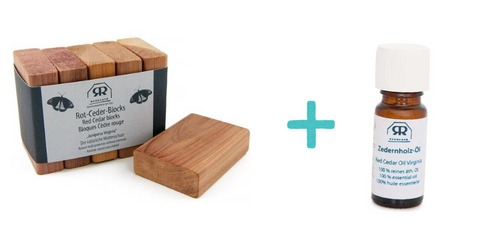
Best for: Long-lasting protection across wardrobes, drawers and storage boxes.
Lightly sand cedar when the scent fades or refresh it with Red Cedar Oil.
Bug Off Moths

Best for: Concentrated, targeted moth protection in drawers, wardrobe corners and clothing storage.
Add a few drops to a cotton round, fabric pouch or Banksia Aroma Pod and place it where needed.
Linii Huon Pine

Best for: An Australian-made option for wardrobes, drawers and stored clothing.
Place finely milled Huon pine bags among stored clothes and throughout the wardrobe.
Frequently asked questions
Why do I suddenly have clothes moths?
Clothes moths may arrive on secondhand clothing, rugs, furniture or other natural-fibre textiles. They can also go unnoticed for some time because their eggs and larvae hide in dark, undisturbed places. Adult moths may seem to appear suddenly, even though the breeding cycle has already been underway.
Will clothes moths eventually go away?
Clothes moths are unlikely to disappear while they still have access to animal fibres, food residues, lint, pet hair and quiet places to breed. To stop the cycle, find and treat the source, clean nearby hiding places and continue checking the area. Once the infestation is addressed, natural deterrents can help make the clean wardrobe less inviting to adult moths.
Does seeing one clothes moth mean I have an infestation?
Not always, but it is worth investigating. Check nearby natural-fibre textiles and quiet spaces for larvae, webbing, fresh fabric damage or further adult moths.
When should I call a pest professional?
Consider professional help if moths continue appearing after you have treated all vulnerable textiles and hiding places, if several rooms are affected, or if the source may be fitted wool carpet, underlay or upholstery. Professional help may also be necessary in an apartment if moth activity extends into shared areas or neighbouring properties.
Could the damage be caused by silverfish instead?
Possibly. Silverfish and clothes moths cause different types of damage and prefer different environments. Read our guide to telling silverfish and clothes moths apart.
Keep your wardrobe naturally protected
Choose red cedar, Australian-made Huon pine or Bug Off Moths to maintain a naturally moth-deterring scent throughout wardrobes, drawers and clothing storage.
Shop natural clothes moth repellentsRelated reads
How to get rid of and prevent clothes moths
Does freezing clothes kill moths? The 72-hour method
How to treat moths in wool carpets and rugs
Silverfish vs moths: What’s the difference—and which oil should you use?